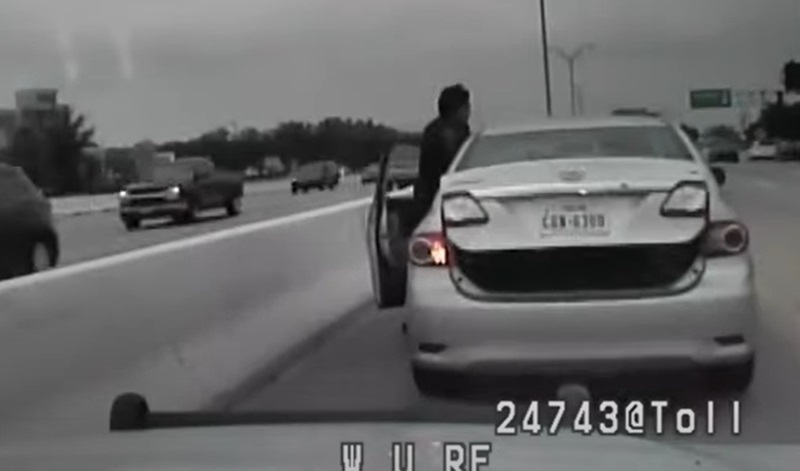
INDIANAPOLIS, April 30, 2026 — In Barnes v. Felix, the United States Supreme Court has now had its final say, by declining to say more. On April 27, 2026, the Court refused to hear yet another appeal by the plaintiff, leaving intact the remand ruling of the United States Court of Appeals for the Fifth Circuit. The result is clear, final, and just: Harris County Deputy Constable Roberto Felix Jr. acted within the law when he defended his life.
The National Police Association, joined by the United Coalition of Public Safety, argued precisely that in its amicus brief before the high court. Policing is not a seminar room exercise. It is a profession of risk, where hesitation can be fatal. The Constitution, properly understood, does not demand paralysis in the face of danger.
And now, by letting the Fifth Circuit’s judgment stand, the Supreme Court has allowed that understanding to prevail. The case is closed.
The facts, long litigated and endlessly second-guessed, are not in dispute. On an April day ten years ago in 2016, Deputy Felix conducted what should have been an ordinary traffic stop. Instead, he encountered defiance. The driver, Ashtian Barnes, did not comply with lawful commands. He chose flight.
Positioned beside the driver’s door, hemmed in by a concrete barrier and moving traffic, Felix faced a choice measured not in minutes but in heartbeats. When Barnes put his car in drive, the deputy was thrust into mortal peril, at risk of being crushed, dragged, or killed outright. Felix ordered Barnes to stop. Barnes accelerated. Felix fired two shots. Barnes died.
From that instant forward, the battle moved from asphalt to courtroom. For ten years, the officer’s decision, made in a flash, under threat of death, was dissected in the sterile calm of litigation. But at every decisive turn, the core truth endured: this was self-defense.
The Fifth Circuit recognized it. Not once, but twice. The Supreme Court returned the case to the Fifth Circuit for a ruling using the reasonable man standard. The Fifth Circuit complied and reached the same decision as before: The law does not demand that an officer wait to be maimed before acting.
“This case has always been about a simple and critical principle: police officers have the right to defend themselves when confronted with a deadly threat,” said Betsy Brantner Smith, retired sergeant and spokesperson for the National Police Association. “Officers cannot be expected to stand by while a suspect turns a vehicle into a weapon.”
Yet, while this case ends, the larger struggle does not. Arrayed against the law enforcement organizations that supported Felix in this litigation were many well-funded advocacy groups, Color of Change, Cato Institute, Southern Border Communities Coalition, Giffords Law Center to Prevent Gun Violence, National Urban League, National Police Accountability Project, and the Southern Poverty Law Center, each advancing theories that would place officers in an impossible bind: act, and risk prosecution; hesitate, and risk death.
Some went so far as to suggest the officer’s fault lay in initiating the stop at all, a doctrine that would paralyze proactive policing and surrender the streets to those willing to exploit such timidity.
This is the quiet revolution of “impact litigation”, not to win a single case, but to reshape the law itself, to impose standards so detached from reality that they render effective policing all but impossible. It is a campaign waged not in patrol cars, but in briefs and motions, aimed at those who must make life-and-death decisions without the luxury of hindsight.
But in Barnes v. Felix, that campaign met its limits.
The courts have spoken. The Constitution remains grounded in reason. And the right of a police officer to defend his life when confronted with immediate, deadly danger endures.
The matter is closed. The principle stands.
The National Police Association and the United Coalition of Public Safety were represented by Robert S. Lafferrandre and Jeffrey C. Hendrickson of Pierce Couch Hendrickson Baysinger & Green, L.L.P., in Oklahoma City, Oklahoma. The brief can be read here.
The National Police Association (NPA) is a 501(c)3 non-profit fighting for law enforcement through education, advocacy, and the courts. For more information, visit NationalPolice.org.
###