Transcript:
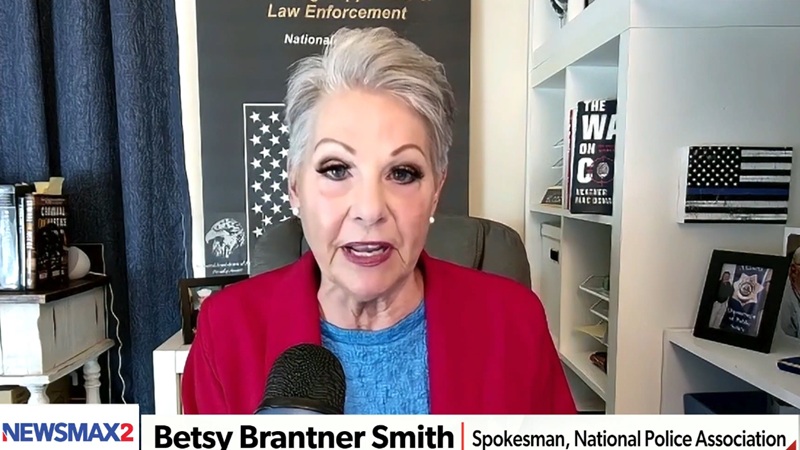
Tracy Sabol: Let’s bring in a spokesperson for the National Police Association, Betsy Brantner Smith. She is joined by a legal affairs reporter for The Washington Times and author of Lawless Lawfare, Alex Sawyer. Ladies, great to be with you, both this morning. Betsy, I wanna start with you.
First, your reaction to the suspect now being in custody and how all of law enforcement really worked together to make it happen.
Betsy Brantner Smith: Well, Kash Patel said it best at the press conference, let good cops be cops. And that’s exactly what happened here in, in this investigation. You know, this suspect was turned in by his family, but they started to look at him because of all the information that had been put out in the last twenty four hours by the FBI and local law enforcement authorities. And local, state, and federal law enforcement, as the governor said today, worked so closely together to get out as much information as possible as well as to track this suspect. You know, they had the firearm, and they had, you know, various shoe prints, arm prints, things like that.
But now, what law enforcement is going to have to do is prepare this case for trial. There’s a lot of work yet to do.
Tracy Sabol: Yeah. Absolutely. And jump off of that. I mean, Alex, you just heard Betsy, she mentioned the family turned him in. They also said that he was full of hate, and they did the right thing by turning him in.
But Alex, legally, could they be held responsible at all for his actions? I mean, maybe if they saw signs that he was capable of something like this.
Alex Swoyer: You know, he’s like he’s an adult. I think you and I have talked in the past about how we’ve seen parents get charged when their child does like a mass shooting. We saw that in Michigan. That’s usually a teenager or someone that lives in the home. Here I think what he’ll end up facing is state murder charge.
Could get the death penalty. There’s an interesting point that I’ve also heard discussed his use of discord and his communications on the internet. Had he communicated with other people about this online, maybe got information about the campus since it’s apparent that he wasn’t a student there. If others were giving him information knowing what he was gonna do, that would take this up to a conspiracy level, and then that might give the feds an option to come in and try this.
Tracy Sabol: Betsy, I’m going get back to you. We know he had no criminal history. And his family said he was full of hate. His dad worked in law enforcement for many years. What do you think happened here?
He obviously became radicalized somehow. Do we have any more information about that?
Betsy Brantner Smith: We don’t yet. We know that he attended UVU for in 2021. He actually received a scholarship, we’re told, but he left very quickly thereafter. Here’s the thing, and I and I’m glad the other guests brought up discord. Parents and grandparents need to stop letting video games and social media and cell phones be babysitters for preteens and teenagers.
And we have also got to stop just allowing young people to find their own way politically. When they saw that their son was filled with hate, this didn’t happen in a vacuum. So what you have to do as a parent and grandparent is start talking and start leading by example. But I will say, of course, we know that sometimes good people turn out bad kids, and my heart breaks for this family. Now what we need to do is move forward and start understanding that using words like fascism and fast public leaders and the legacy media saying things like, you know, your rights are gonna be taken away and things like that.
It affects young people, especially broken young people. Parents and grandparents also need to monitor young people’s account on things like Reddit and Discord and beyond that. It’s not about Facebook and X anymore. Your kids are communicating with others, and if you think your kid has a problem, you need to investigate.
Tracy Sabol: Yeah. Absolutely. Those are all great points there. Alex, back to you. You know, president Trump said earlier they were not sure if the suspect may have been part of a bigger network, and we all know about that.
Now, if that were the case, you mentioned him talking on Discord, if he was meeting up with other groups and discussing this, could they possibly face any charges here?
Alex Swoyer: Yes. I mean, if they had knowledge of what he was doing, if they were helping him in any way, then of course, they would be culpable. And then that’s when we would get into a conspiracy type charge that could come down, and that would also give the federal government option options to come in, especially if these communications were happening online on the Internet. And, you know, a lot of people talk about federal hate crimes. The thing about the federal hate statute is that it targets people who commit crimes based on race, religion, national origin.
It does not include political differences or political viewpoints. So that’s, I think that’s kind of something that people ask about, but would not apply. I think the way that the feds would get involved is if we are gonna hear more information about anything that was on Discord, if somebody else knew what he was doing, didn’t say anything, was helping him with locations or to get on campus. We have more, I guess, more facts will come out. It looks like it’ll be three days or so and we’ll get a charging document.
And in that charging document before his first appearance, before a judge, we will also get more information about what was said during his interrogation. Whichever agent led that those conversations, we’ll have to make notes. And so we’ll get a glimpse of that too.
Tracy Sabol: Betsy, what comes next? Now, we have the suspect in custody. What comes next in the investigation?
Betsy Brantner Smith: Well, now you’ve got to prepare this case for trial. I I would imagine that, you know, he’s being given a mental health evaluation right now. They’re going to also have to continue to gather evidence. You know, there’s so much video evidence, but there’s even more. Remember, thousands of tips came in about this case.
And, you know, so many people at this rally had cell phone video. You know, Turning Point was recording it. And so there’s gonna be a lot more evidence to sift through, you know, physical evidence, video, and photographic evidence. The gun and the rounds used will be traced back to find out where this firearm came from, where he got the rounds, how did he purchase it, all of that. So there is a lot of work to do.
And we’ve got to remember that law enforcement can’t release absolutely everything because you’ve gotta look at the potential tainting of a jury pool when this case eventually goes to trial. So this is a real delicate balance, for law enforcement. And, we’re going to continue to have state, local, and federal, law enforcement officers involved.
Tracy Sabol: Yeah. We’ll see what happens next. Ladies, thank you both so much for weighing in. We appreciate your expertise.