Transcript:
Shannon Cake: Joining me now to discuss the latest on this back and forth with Mexico, former ICE acting director John Torres and retired Chicago area police officer Betsy Brantner Smith. Thanks to both of you for being here. Thanks very much. Good morning. President Trump telling reporters in the Oval on Monday, quote, I would launch strikes in Mexico to stop drugs.
That was the question posed to him. And he said it’s okay with me. Whatever we have to do to stop drugs, he went on. I looked at Mexico City over the weekend. There are some big problems over there
However, the Mexican president, of course, has refused our help, he said. If the cartels controlled Mexico, the president said, should we consider it a failed state? The comments, of course, setting up this back and forth in the last forty eight hours between the two sides. Betsy, let’s start with you. Your thoughts on this dust up.
Sgt. Betsy Smith (Ret): Well, I’m sitting right now 80 miles from Mexico in Southern Arizona. And in Southern Arizona, we know the impact that the cartels have not just on drugs but on human trafficking on other related crime they suck in our young people here to get involved in all kinds of nefarious activity. So, you know, we have been dealing with this since the nineteen eighties. American law enforcement working with Mexican law enforcement. So I’d like to see this cooperation continue, but I know that the president of Mexico, you know, has her own political issues.
So she has to push back against President Trump. I want to see more cooperation and I think that we will.
Shannon Cake: John, your thoughts, you’re, you know, you’ve been front and center on this.
John Torres: Yeah. And further Betsy’s point, the problem with the cartels in Mexico has been going on not only since the eighties, but we’re talking about how they’ve also impacted law enforcement in addition to the hundreds of thousands of people that died from drug overdoses, drugs born across our southern border. So I look back at the kidnapping and death of the DEA agent in the eighties. And then we had ICE agent Jaime Zapata who was ambushed and killed in 2013 by the cartel down in Mexico. And so this is a problem that’s been going on for a long time.
As Betsy says, in addition to the drugs that are coming across the border, we work many cases of human trafficking, human smuggling as well as bulk cash smuggling. And so there’s a lot of illegal activity that’s been crossing the border for many years. And I think President Trump is trying to seriously make a point here that he will do whatever it takes to reduce those deaths here in the United States.
Shannon Cake: But strikes in Mexico, some are saying that’s a bridge too far. Your thoughts taking let’s start stay with you, John, on this. Taking the fight onto foreign soil, you know, without Mexico’s green light, this could be considered an act of war. John, start with you.
John Torres: Yes. It could be considered an act of war. And I think President Trump being the master negotiator that he is, he always takes it to the extreme and says this is what we’re gonna do here. And ultimately, he’s gonna force people to come to the table and take this more seriously than Mexico has over the years. We’ve seen in my time times where we work closely with Mexican law enforcement, but you always have to deal with the potential corruption and the influence of the cartels on Mexican law enforcement.
So there are some serious discussions that are gonna have to take place here.
Shannon Cake: Betsy, I’m curious your thoughts. Do you do you think that the strikes we focus on really should remain on hitting these, you know, drug smuggling boats instead of going, you know, onto foreign soil here
Sgt. Betsy Smith (Ret): or striking foreign soil? Well, we’ve always had federal agents, you know, American federal agents in Mexico dealing with narcotics and other issues so I think John is spot on that you know we’re going to see some serious negotiations. The cure we’re still seeing. The fentanyl precursors and again other crimes and let’s remember the Mexican cartels don’t just operate in Mexico and the United States, they operate in about 60 plus other countries and they’re involved in all kinds of other crimes. So I think there’s gonna be a lot happening behind the scenes.
And we at the National Police Association look forward to it.
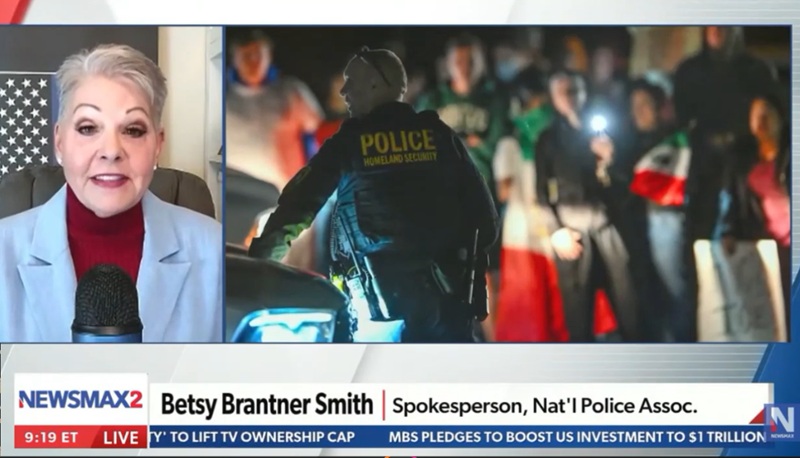
Shannon Cake: Yeah. Operating many of our US cities as well. Let’s pivot now to ICE and their efforts to round all this up. North Carolina becoming this new flash point, Trump focus on on his crackdown on illegal immigration here. It was a very busy night for federal agents once again on the streets of Charlotte and over the past weekend to a lot of protesters out in force.
But cities like Durham and Raleigh, everybody’s kinda raising eyebrows on this. North Carolina is a swing state. Critics are pushing back that, you know, we’re not near the border here, but there is large illegal immigrant problems in these cities. Betsy, let’s start with you.
Sgt. Betsy Smith (Ret): Look, this should not be a political issue. ICE is going in and they are doing their job. They’re enforcing the laws that Congress has enacted. And yet for some reason, we have political leadership throughout the country who is they’re trying to get ICE agents hurt. They are dehumanizing them.
They are calling them slave patrols. They’re telling them to go away. They’re encouraging these protests and yet ICE leadership thank God is not backing down and we are going to see more of these protests more of these attacks car attacks are up 1300% on ICE agents. I wish that the Democrats would decide that they’re going to back off on trying to get cops heard and work on this through the legislature because it’s getting incredibly dangerous.
Shannon Cake: I love that you’re talking numbers here, Betsy. I wanna wrap wrap with you, John. I believe I have about a minute left. A 130 arrested, undocumented immigrants arrested in Charlotte in the last few days. That included several with previous charges ranging from driving under the influence to aggravated assault.
These are these are not nice people, and Department of Homeland Security is bringing out the stats. John, with to you and then Betsy, I’ll close with you on that.
John Torres: Yeah. So as we’re talking numbers here in the Charlotte area, there are as many as 425,000 illegal immigrants in that area. Many of those who have criminal backgrounds. The Republican lawmakers have reported that the murder rate is up 200% in Charlotte and that violent crime involving knives and guns have risen from the 80, about 85 to about a 115 so far this year. And so when you look at those numbers, you have to do something differently to bring those numbers down.
And especially when you have that many foreign criminals in one concentrated area, there’s a lot that ICE and Customs and Border Protection can do to take those people off the streets and place them in immigration proceedings.
Shannon Cake: Betsy, final thoughts on most violent among us, the most violent illegal immigrants being rounded up in this latest push.
Sgt. Betsy Smith (Ret): Look. It’s very simple. More cops equals less crime. And so when you have these surges and you’re arresting child rapists and other nefarious people, it’s a good thing for that community and it’s a good thing for America. Let’s support it.
Shannon Cake: Former acting ICE director John Torres, retired Chicago area police officer Betsy Brantner Smith. Great to have you both on. Thanks for being here. Thanks. Good to have you.