INDIANAPOLIS, April 21, 2026 – The National Police Association (NPA) applauds the decisive action by the Supreme Court of the United States, granting certiorari, vacating the judgment of the United States Court of Appeals for the Ninth Circuit, and remanding the case for reconsideration in the matter of Kyle Smith, et al. v. Rochelle Scott, et al.
The outcome aligns directly with the National Police Association’s May 2025 amicus brief, filed in association with the Police Officers’ Defense Coalition, which urged the Court to prevent the expansion of officer liability based on vague, after-the-fact legal interpretations.
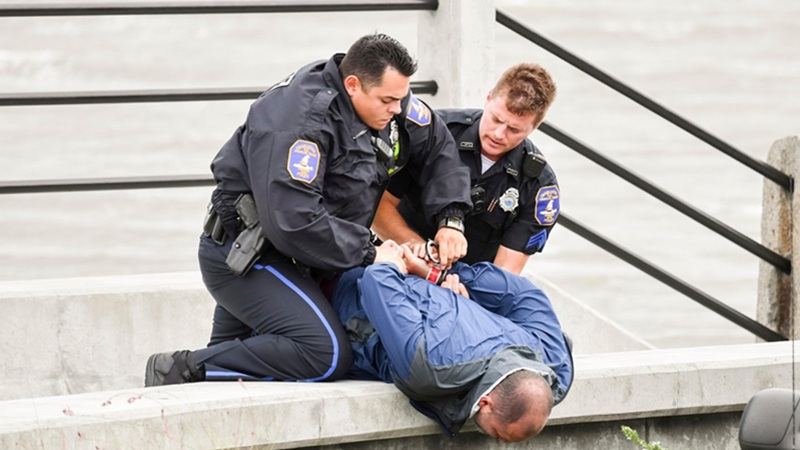
The Ninth Circuit attacked the use of bodyweight compression, a widely taught and carefully regulated law enforcement control technique used to restrain actively resisting or combative individuals. The NPA’s amicus brief made clear that bodyweight compression, when applied in accordance with training and departmental policy, is a non-deadly force option that plays a critical role in safely resolving volatile encounters.
“The Supreme Court has sent a necessary and unmistakable signal,” said Sgt. Betsy Brantner Smith (Ret.), spokesperson for the National Police Association. “Police officers must be judged based on clearly established law, not shifting theories that second-guess lawful, trained techniques like bodyweight compression.”
The Court’s directive to reconsider the case in light of Zorn v. Linton is especially significant. In that decision, the Supreme Court reaffirmed that officers are entitled to qualified immunity unless their conduct violates clearly established law defined with specificity. Broad or generalized precedent cannot be used to impose liability. This principle directly addresses the NPA’s concern that the Ninth Circuit’s now-vacated ruling risked treating bodyweight compression as inherently dangerous or constitutionally suspect without any clearly established legal basis.
The NPA’s amicus brief rejected such reasoning, emphasizing that bodyweight compression is designed to achieve rapid control, limit escalation, and reduce reliance on higher levels of force. When properly applied, it can shorten physical confrontations and decrease the likelihood that officers must resort to strikes, conducted energy weapons, or firearms. In that sense, the technique serves not only officer safety but also the safety of suspects and bystanders.
By vacating the Ninth Circuit’s decision, the Supreme Court has removed the immediate threat that its reasoning could become entrenched as binding precedent across a vast region of the country. Had it remained in place, the ruling could have deterred officers from using effective, policy-approved restraint techniques out of fear that those actions might later be recharacterized as unconstitutional in civil litigation.
“This ruling restores balance,” Sgt. Smith added. “Without tools like bodyweight compression, officers are left with fewer options, often more dangerous ones. The law must reflect the realities officers face, not hypothetical alternatives imagined after the fact.”
Today’s action by the Supreme Court reinforces that constitutional limits on policing must be clearly defined before liability can attach. It prevents lower courts from effectively creating new rules by analogy and ensures that officers are not punished for relying on established practices supported by training and experience.
The National Police Association will continue its work before the courts to defend lawful policing practices and to ensure that officers are protected from legal standards that are unclear, inconsistent, or detached from operational reality.
The National Police Association and the Police Officers’ Defense Coalition are represented by James L. Buchal, of Murphy & Buchal LLP, in Portland, OR. The full brief is available on the Supreme Court docket and can be read here.
The National Police Association (NPA) is a 501(c)3 non-profit fighting for law enforcement through education, advocacy, and the courts. For more information, visit NationalPolice.org.
###