
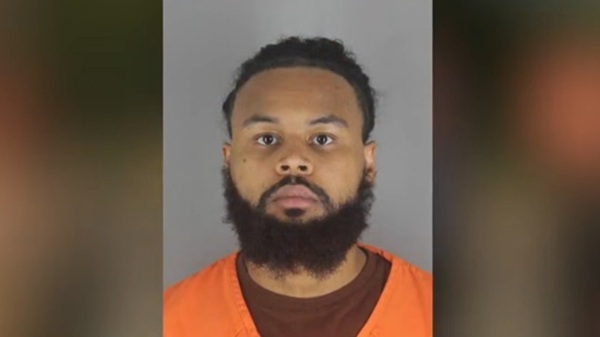
According to authorities, Darius Ahmadd Olson-Baker, a man with a long history of residential burglaries and a recent firearm conviction, was released from prison on supervised release on July 7. Just ten days later, prosecutors allege he committed an armed home invasion, attempted to rape a woman, and assaulted her when she resisted.
Five days after that, they allege he entered another home with a firearm and sexually assaulted another victim.
America did not suddenly become a more violent nation. Our laws did not suddenly become powerless. What changed was something far more fundamental: the political class steadily embraced the comforting illusion that violent criminals are primarily victims of society, that incarceration is itself an injustice, and that public safety is somehow enhanced by returning repeat offenders to our neighborhoods sooner rather than later.
The tragedy unfolding in Brooklyn Park, Minnesota, should force every elected official, judge, corrections administrator and criminal justice reform advocate to confront the consequences of that illusion.
Had Olson-Baker remained incarcerated, the women who prosecutors say were victimized in those two home invasions would never have encountered him during those critical days. That is not speculation. It is simple chronology.
For decades Americans understood a principle so obvious that it required little debate: dangerous criminals belong behind bars because prison protects innocent people. Every day a violent offender remains incarcerated is another day he cannot burglarize a home, rob a family, rape a victim, or murder a police officer.
Yet over the last generation, that common-sense principle has steadily yielded to an ideology that views incarceration itself as the greater injustice.
We are told prisons are overcrowded. We are told sentences are too long. We are told rehabilitation requires never-ending “second chances.”
But the mother asleep in her bedroom at two o’clock in the morning does not care about criminal justice theories. She cares whether the man breaking through her window should have been on the street in the first place.
That question deserves an honest answer.
Reform advocates often respond that supervised release is not “early release” at all. Technically, Minnesota’s sentencing structure provides for a custodial term followed by supervised release if statutory requirements are met.
If someone with a demonstrated pattern of residential burglary and a firearm conviction is released into the community only to be accused of committing similar violent crimes within days, citizens have every right to ask whether the system properly balanced the interests of offenders against the safety of potential victims.
The first duty of government is not rehabilitation. It is not social experimentation. It is not reducing prison populations to satisfy advocacy organizations or academic theories.
The first duty of government is protecting innocent people.
Police officers understand this better than anyone because they arrive after the consequences have already unfolded. They knock on the victim’s door. They photograph the crime scene. They comfort traumatized families. They search for armed suspects who should never have had another opportunity to victimize anyone.
Officers do not create these situations.
They inherit them.
Every unnecessary release creates another potentially dangerous encounter for the deputy answering a burglary call, the patrol officer conducting a traffic stop, or the detective searching for a violent fugitive.
Every failed risk assessment shifts the burden from policymakers to the men and women wearing a badge. That burden is measured not in statistics but in blood.
Violent repeat offenders and habitual residential burglars deserve a fundamentally different analysis than first-time, nonviolent offenders.
Risk assessments should not be driven primarily by formulas designed to reduce incarceration. They should begin with a simple question: If this individual commits another violent crime after release, could the available evidence have reasonably predicted that outcome?
If the answer is yes, then public safety, not political fashion, should prevail.
America’s criminal justice system exists first for law-abiding citizens.
The single mother deserves more protection than the repeat burglar.
The elderly homeowner deserves more consideration than the career offender.
The police officer responding to a burglary deserves more concern than the criminal who repeatedly demonstrates contempt for the law.
Those priorities once united Americans across political lines.
They should again.